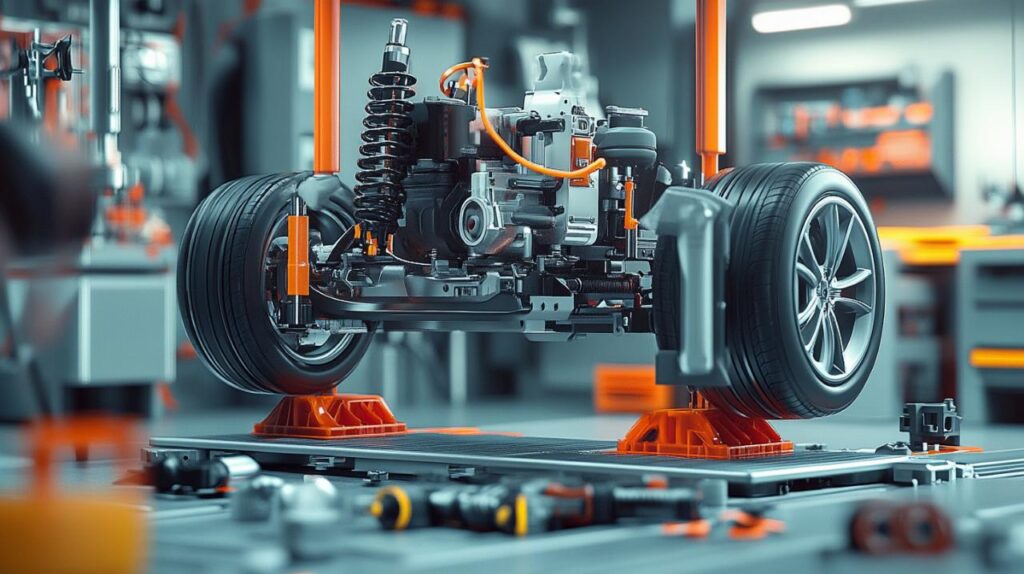
Hydraulic jacks have become an indispensable tool for lifting heavy objects, from vehicles in need of tyre changes to massive construction equipment requiring precise positioning. These remarkable devices harness the power of fluid mechanics to multiply force, enabling a single person to hoist loads that would otherwise demand the strength of many. Understanding the intricate interplay between the reservoir, pump, piston, and valves reveals the elegant engineering that makes such impressive lifting capacity possible in a compact and reliable package.
Understanding Pascal's Law and the Fundamentals of Hydraulic Pressure
The scientific principle behind hydraulic force transmission
At the heart of every hydraulic jack lies a fundamental principle of physics known as Pascal's Law, named after the French mathematician and philosopher Blaise Pascal. This principle states that when pressure is applied to a confined incompressible fluid, that pressure is transmitted equally in all directions throughout the fluid. In practical terms, this means that a small force applied to a small area can generate a much larger force over a larger area, provided both are connected by the same hydraulic fluid system. The beauty of this principle is its consistency: regardless of the shape or size of the container, the pressure change remains uniform across the entire enclosed volume. This predictable behaviour makes hydraulic systems exceptionally reliable for applications requiring precise force amplification.
The mathematical relationship underpinning this force multiplication is straightforward yet powerful. If a modest force pushes on a small piston, the pressure created in the fluid is calculated by dividing that force by the area of the piston. When this pressurised fluid encounters a larger piston elsewhere in the system, the same pressure acts upon the greater surface area, resulting in a proportionally increased output force. This elegant mechanism allows hydraulic jacks to lift loads weighing several tonnes with relatively minimal input effort, making them essential tools in both professional workshops and home garages.
Why confined fluid systems create mechanical advantage
The confinement of hydraulic fluid within a sealed system is crucial to the effectiveness of force transmission. Unlike gases, which are highly compressible and would dissipate applied pressure, hydraulic fluids are largely incompressible under normal operating conditions. This characteristic ensures that virtually all the input energy is converted into useful work rather than being lost to fluid compression. The sealed nature of the system also prevents leakage, maintaining pressure integrity and ensuring that the force amplification remains consistent and predictable throughout the lifting operation.
This mechanical advantage becomes particularly evident when comparing the displacement of the smaller input piston to the larger output piston. While the smaller piston may travel a considerable distance with each pump stroke, the larger piston moves proportionally less, but with far greater force. This trade-off between distance and force is what enables hydraulic jacks to handle heavy loads that would be impossible to lift through direct mechanical means alone. The confined fluid effectively acts as an intermediary, translating rapid, low-force movements into slow, high-force lifting actions with remarkable efficiency.
Breaking Down the Core Components: Reservoir, Pump, Pistons and Valves
The Role of the Hydraulic Fluid Reservoir and Pumping Mechanism
The reservoir serves as the vital storage chamber for hydraulic fluid within the jack assembly. Typically constructed as a cylindrical vessel, this component must hold sufficient fluid to allow for the full range of piston movement whilst maintaining adequate pressure throughout the system. The quality and quantity of fluid in the reservoir directly influence the jack's performance, as insufficient fluid levels can lead to air entering the system, which compromises the incompressibility advantage that makes hydraulic systems so effective. Regular inspection of fluid levels forms an essential part of maintenance, ensuring the jack operates at peak efficiency and preventing potential damage to internal components.
Connected to the reservoir is the pumping mechanism, which consists of a plunger piston operated by a handle or lever. When the operator moves the handle, the plunger piston draws hydraulic fluid from the reservoir and forces it into the main cylinder under pressure. This action is cyclical, with each stroke of the pump transferring a measured volume of fluid and incrementally raising the load. The design of the pump must balance efficiency with durability, as it experiences repeated mechanical stress during operation. Many modern hydraulic jacks incorporate ergonomic handle designs that reduce operator fatigue whilst maximising the force transmitted to the fluid with each pump stroke.
How check valves and cylinder pistons work together
The check valve represents one of the most ingenious components in the hydraulic jack system. Positioned strategically within the fluid pathway, this valve allows fluid to flow in only one direction, preventing backflow that would otherwise cause the jack to lower under load. When the plunger piston pushes fluid towards the main cylinder, the check valve opens, permitting passage. However, when the plunger retracts to draw more fluid from the reservoir, the check valve closes automatically, trapping the pressurised fluid in the main cylinder and maintaining the elevated position of the load. This simple yet effective mechanism ensures that lifting progress is preserved with each pump cycle, allowing for controlled and predictable raising of heavy objects.
The ram cylinder and its associated piston form the load-bearing portion of the hydraulic jack. As pressurised fluid enters the ram cylinder from the pump, it acts upon the base of the ram piston, generating an upward force. The size of this piston is considerably larger than the plunger piston, creating the mechanical advantage described by Pascal's Principle. As more fluid enters the cylinder with successive pump strokes, the ram piston extends progressively, lifting the load incrementally until the desired height is reached. The precision machining of both the cylinder and piston is critical, as even minute gaps can allow fluid to bypass the piston, reducing efficiency and lifting capacity.
The release valve completes the functional quartet of critical components. Unlike the check valve, which operates automatically, the release valve is typically controlled manually by the operator. When it comes time to lower the load, opening the release valve allows hydraulic fluid to flow back from the ram cylinder into the reservoir. This controlled release enables gradual lowering of the load, preventing sudden drops that could damage the object being lifted or pose safety hazards. The design of the release valve often incorporates fine adjustment capabilities, allowing operators to regulate the descent speed with precision, which proves particularly valuable when positioning heavy components with exacting requirements.
Practical applications: from vehicle maintenance to heavy-duty construction
Common Uses of Hydraulic Jacks in Automotive Servicing
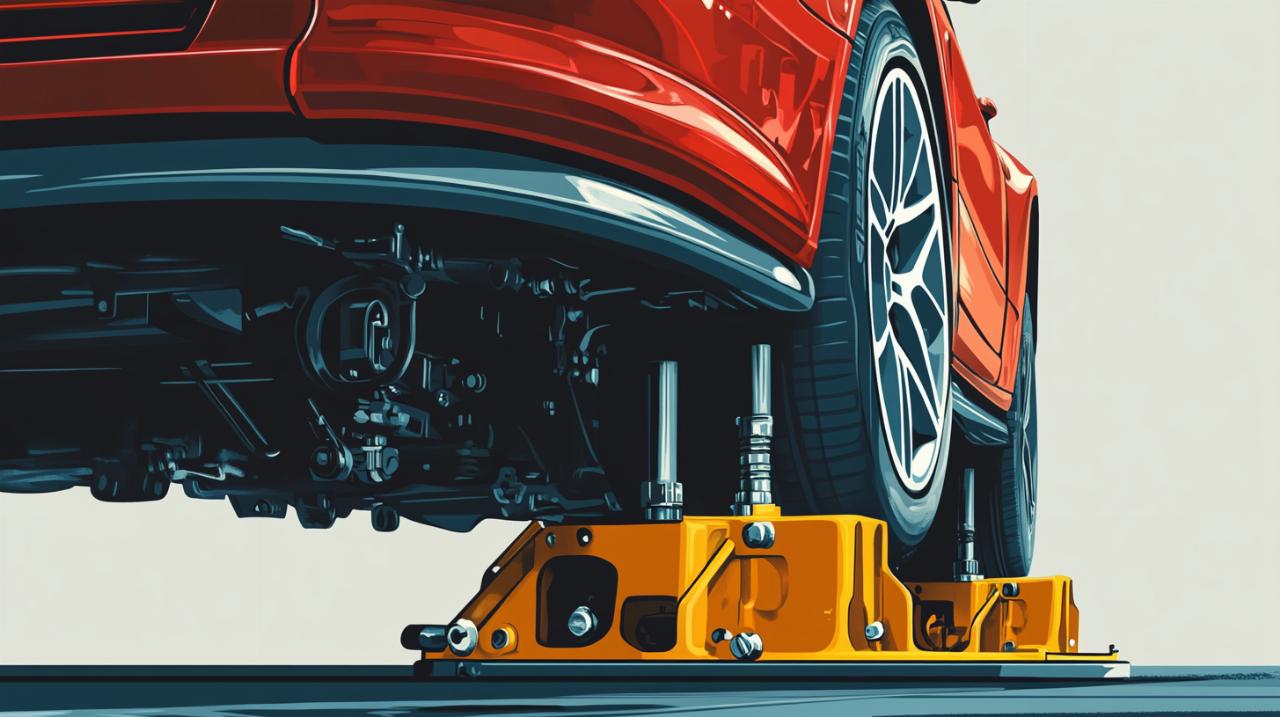
In automotive maintenance, hydraulic jacks have become synonymous with efficiency and safety. The typical vehicle weighs between four thousand and four thousand two hundred pounds, making manual lifting impractical and dangerous. Hydraulic floor jacks, with their low-profile design and wheeled base, slide easily beneath vehicles, positioning themselves at reinforced jacking points on the chassis. Once in place, a few swift pumps of the handle raise the vehicle sufficiently to remove wheels, inspect suspension components, or access the undercarriage for repairs. The ability to lift such substantial weight with minimal physical exertion has transformed vehicle servicing from a labour-intensive ordeal into a routine procedure accessible to both professional technicians and home enthusiasts.
Selecting the appropriate hydraulic jack for automotive work requires consideration of several factors. Load capacity stands paramount, with experts generally recommending a jack capable of lifting at least five tons, equivalent to eleven thousand pounds, to provide a comfortable safety margin above the vehicle's actual weight. Clearance height also matters significantly, as the jack must fit beneath the vehicle in its lowered state, whilst lift height determines the maximum elevation achievable. Modern electric car jacks, such as those offered by specialised manufacturers, often feature lifting ranges spanning from just over six inches to nearly eighteen inches, providing versatility for different vehicle types and maintenance requirements. The integration of electric motors in some models further reduces physical effort whilst increasing lifting speed, though traditional manually operated hydraulic jacks remain popular for their simplicity and reliability.
Industrial and Construction Applications of Hydraulic Lifting Systems
Beyond the automotive realm, hydraulic jacks find extensive application in construction and industrial settings where heavy machinery, structural components, and equipment demand precise positioning and support. Hydraulic bottle jacks, characterised by their vertical orientation and compact footprint, excel in confined spaces where lateral clearance is limited. These robust units can support extraordinary loads, making them indispensable for tasks such as stabilising bridge sections during construction, levelling heavy machinery during installation, or providing temporary support for structural elements during renovation work. Their portability combined with impressive lifting capacity allows construction crews to deploy them rapidly wherever heavy lifting challenges arise.
Hydraulic scissor jacks represent another specialisation within the broader category, employing a diamond-shaped linkage mechanism actuated by hydraulic pressure. This design provides enhanced stability compared to traditional vertical jacks, distributing the load across a wider base and reducing the risk of toppling under off-centre loads. Such jacks frequently appear in scenarios requiring both elevation and stability, such as positioning heavy equipment on uneven ground or creating temporary work platforms for maintenance personnel. Hydraulic transmission jacks serve the specialised function of supporting and positioning vehicle transmissions during installation and removal procedures, featuring precisely angled cradles that accommodate the awkward shapes of these components whilst allowing technicians to manoeuvre them with control and precision.
Proper maintenance ensures hydraulic jacks continue performing reliably throughout their service life. Regular visual inspections identify potential issues such as fluid leaks, damaged seals, or corrosion before they compromise functionality. Keeping moving parts properly lubricated reduces wear and maintains smooth operation, whilst proper storage protects jacks from environmental factors that might degrade components. Monitoring hydraulic fluid levels and quality prevents air contamination and ensures optimal pressure transmission, whilst periodic testing under controlled conditions verifies that lifting capacity remains within specified parameters. When problems do arise, systematic troubleshooting addresses common issues such as slow lifting, failure to hold pressure, or complete operational failure, often traced to low fluid levels, air in the system, or worn seals requiring replacement.
Safety considerations must never be overlooked when working with hydraulic jacks. These devices are designed exclusively for lifting, not supporting, heavy loads over extended periods. Once a load is raised to the required height, jack stands or other appropriate support equipment should immediately be positioned to bear the weight, allowing the hydraulic jack to be released and removed. This practice guards against catastrophic failure should the jack's seals fail or fluid leak from the system. Additionally, hydraulic jacks must always operate on stable, level surfaces to prevent lateral shifting under load, and lifting should only occur at designated structural points capable of bearing concentrated forces without deformation. Adhering to these fundamental safety principles transforms the hydraulic jack from a potentially hazardous tool into a reliable workhorse that safely accomplishes demanding lifting tasks day after day.