

The evolution of safety in motorsport represents one of the most remarkable transformations in modern engineering, where the relentless pursuit of speed has been matched by an equally determined commitment to protecting those who risk everything on the track. From the early days when drivers wore little more than leather caps and goggles to the sophisticated protection systems of today, the journey towards comprehensive driver security has been shaped by tragedy, innovation, and an unwavering dedication to preserving life at the highest speeds known to competitive sport. As racing cars hurtle around circuits at velocities that test the very limits of human capability, the equipment that secures the driver has become a masterclass in cutting-edge technology and rigorous safety standards.
Essential Safety Harnesses and Restraint Systems in Racing Cars
The fundamental principle of keeping a driver securely positioned within the cockpit during the extreme forces of racing relies upon highly specialised harness systems that have evolved dramatically over recent decades. Modern racing harnesses represent a far cry from the simple lap belts of earlier eras, with contemporary designs incorporating multiple attachment points that distribute load across the strongest parts of the human body. These sophisticated restraint systems work in concert with other safety devices to create a comprehensive protection network that can mean the difference between walking away from an accident and sustaining serious injury.
Six-point harness configuration and hans device integration
The six-point harness has become the gold standard in motorsport safety, featuring two shoulder straps, two lap belts, and two anti-submarine straps that prevent the driver from sliding beneath the lap portion during frontal impacts. This configuration ensures that during a collision, the tremendous deceleration forces are spread across the pelvis, chest, and shoulders rather than concentrated on vulnerable areas such as the abdomen or neck. The integration of these harnesses with the Head and Neck Support device, commonly known as the HANS device, represents a watershed moment in driver protection that followed a series of tragic incidents in the late twentieth century. Introduced as mandatory equipment in Formula 1 in 2003, the HANS device tethers the helmet to the body restraints, dramatically reducing the violent forward motion of the head during sudden stops. This combination of harness and head restraint has proven so effective that it has virtually eliminated the basilar skull fractures that once claimed the lives of several prominent drivers, including the legendary Ayrton Senna whose death in 1994 catalysed sweeping reforms across the sport.
Advanced seat belt technology and quick-release mechanisms
Beyond the configuration itself, the materials and mechanisms employed in modern racing harnesses reflect decades of materials science advancement and practical racing experience. Contemporary belts utilise high-tensile synthetic fibres capable of withstanding enormous loads whilst remaining relatively lightweight, with stringent regulations dictating replacement intervals to ensure degradation does not compromise their integrity. The quick-release mechanism sits at the centre of the harness system, designed to allow drivers or rescue personnel to disengage all restraints with a single action, typically within three seconds. This seemingly simple feature represents countless hours of engineering refinement, as it must remain absolutely secure during normal racing conditions whilst being instantly accessible in emergencies. The buckle design must function reliably even after severe impacts that might deform the cockpit structure, and must be operable by gloved hands under conditions of poor visibility or disorientation. Racing regulations mandate regular inspection and certification of these systems, with different motorsport categories maintaining specific standards regarding belt width, attachment angles, and load-bearing capacity to suit the particular demands of each discipline.
Protective cockpit architecture and survival cell design
Whilst restraint systems secure the driver within the vehicle, the structural integrity of the cockpit itself forms the essential foundation upon which all other safety measures depend. Modern racing car architecture treats the driver compartment as a survival cell, a protected zone designed to remain intact and maintain its shape even when the surrounding structure absorbs catastrophic impacts. This philosophy represents a fundamental shift from earlier approaches where chassis flexibility was sometimes viewed as acceptable, to contemporary designs where the cockpit must be essentially indestructible under racing conditions.
Carbon fibre monocoque construction and impact absorption
The introduction of carbon fibre monocoque construction revolutionised racing car safety when McLaren first pioneered its use in Formula 1 during 1981, creating a single-piece chassis structure of unprecedented strength and rigidity. Unlike the tubular space frames that preceded them, monocoque designs eliminate joints and welds that could represent potential failure points, instead creating a continuous shell that distributes impact forces across a wide area. The material properties of carbon fibre composites allow engineers to tune the structure's characteristics with remarkable precision, creating areas designed to absorb energy through controlled deformation whilst ensuring the survival cell itself remains rigid. Modern Formula 1 monocoques must pass rigorous crash testing that simulates impacts from multiple angles, with the structure required to withstand forces equivalent to several times the weight of a London double-decker bus without intrusion into the driver compartment. The layering of carbon fibre sheets in different orientations creates a matrix that can withstand both compressive and tensile forces, whilst additional reinforcement around the driver's feet, sides, and head provides extra protection in the most vulnerable areas. This approach to chassis construction has filtered down through various racing categories, with even relatively modest motorsport series now employing composite materials that would have been unimaginable in professional racing just a generation ago.
Roll cage specifications and fire suppression systems
For racing categories that do not employ full monocoque construction, the roll cage remains the primary structural defence against impacts and rollovers, having been developed extensively during the 1960s and 1970s following numerous incidents. These tubular frameworks must conform to detailed specifications regarding tube diameter, wall thickness, triangulation points, and mounting locations to ensure they can withstand the forces generated when a vehicle tumbles or impacts barriers at racing speeds. The geometry of roll cage design has become highly sophisticated, with computer modelling now predicting load paths and optimising brace placement to maximise protection whilst minimising weight and interference with driver access. Fire suppression systems represent another critical layer of protection within the cockpit, addressing one of the most feared hazards in motorsport where high-speed impacts can rupture fuel systems and electrical components simultaneously. Mandatory fire suppression systems became standard in professional racing during the 1970s, with modern installations featuring automatic activation triggered by sensors detecting rapid temperature increases or violent deceleration. These systems discharge fire suppressant chemicals throughout the cockpit and engine bay within milliseconds, buying precious time for the driver to evacuate whilst also protecting against the fire-resistant materials of the racing suit being overwhelmed. The integration of these systems with the overall vehicle architecture ensures that suppressant reaches all potential ignition sources, with redundant triggers and manual activation options providing multiple layers of protection against this ancient hazard that has claimed lives since the earliest days of motor racing.
Personal protection equipment and modern safety standards
The equipment worn by the driver represents the final and most personal layer of protection, evolved from the minimal gear of early racing into a comprehensive system of clothing and devices that must meet exacting international standards. Every item a modern racing driver wears has been scrutinised, tested, and certified to provide maximum protection against the specific hazards encountered in high-speed motorsport, from fire to impact to environmental factors such as carbon monoxide or fuel vapour exposure.
Racing helmets and flame-resistant suit technology
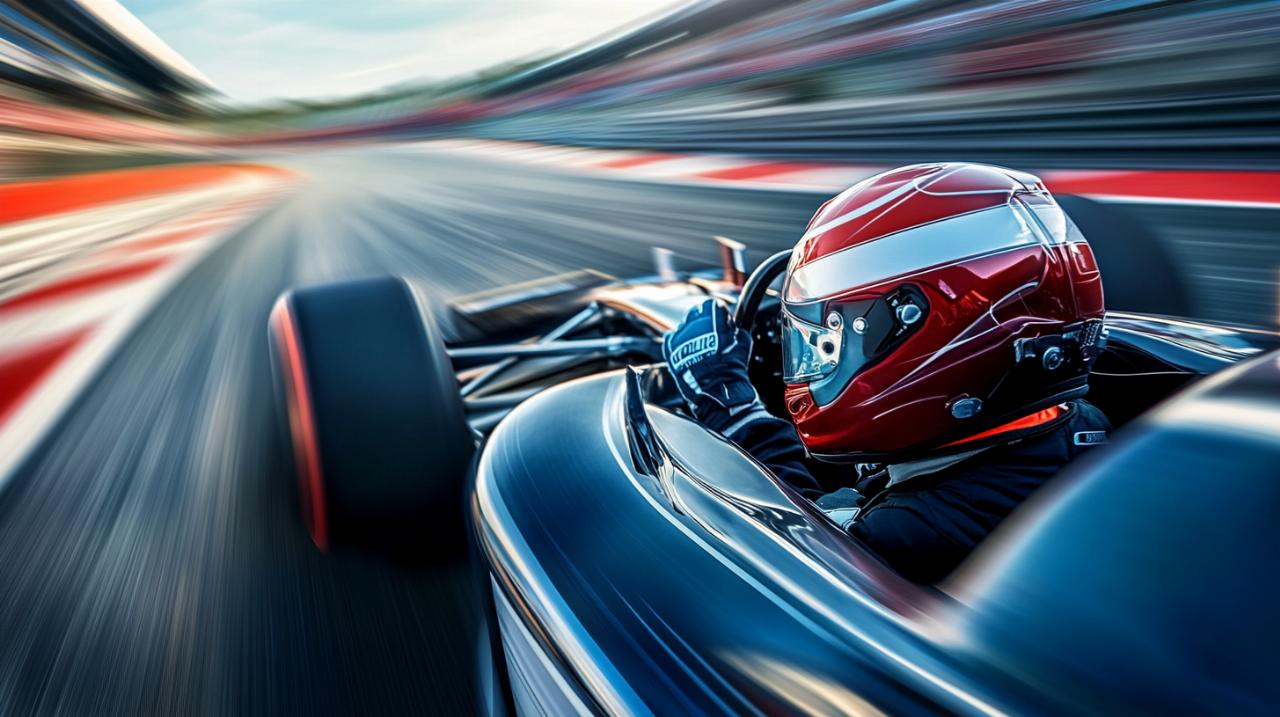
The modern racing helmet stands as perhaps the most recognisable piece of driver equipment, having evolved from simple leather caps through various iterations to become a sophisticated piece of protective engineering. Contemporary designs must withstand multiple types of impact whilst providing visibility, ventilation, and integration with communication systems and the HANS device. The outer shell typically employs advanced composite materials combining carbon fibre, Kevlar, and other synthetics chosen for their ability to dissipate impact energy, whilst the multi-density foam liner absorbs and distributes forces away from the skull. Visor technology has advanced to provide optical clarity comparable to high-quality sunglasses whilst incorporating tear-off layers that allow drivers to maintain clear vision despite oil spray or debris accumulation during races. Fire-resistant racing suits have progressed enormously since their mandatory introduction in 1963, when early versions offered limited protection compared to the multi-layer garments worn today. Modern suits utilise materials such as Nomex, a flame-resistant meta-aramid developed originally for military applications, woven into fabrics that can withstand direct flame exposure for extended periods without igniting or melting onto the skin. The suits incorporate multiple layers with air gaps between them, creating an insulating effect that slows heat transfer to the body, whilst strategic placement of additional material in high-risk areas provides extra protection. Gloves, boots, and undergarments all receive similar treatment, creating a complete envelope of protection that, combined with the cockpit fire suppression systems, has dramatically reduced burn injuries in modern motorsport despite the continued presence of substantial fuel loads in racing vehicles.
Biometric monitoring systems and emergency response features
The cutting edge of driver safety increasingly involves sophisticated monitoring systems that track vital signs and physiological responses during racing, providing both performance data and early warning of medical emergencies. Sensors embedded within the seat, harness, or even the racing suit itself can monitor heart rate, breathing, body temperature, and other indicators that might reveal problems ranging from dehydration to more serious medical events. This real-time data streams to team personnel and medical staff, allowing rapid response if readings indicate distress or if the sudden absence of vital signs suggests unconsciousness following an impact. Crash data recorders, analogous to the black boxes in aircraft, capture detailed information about vehicle dynamics during incidents, helping investigators understand exactly what forces were involved and how safety systems performed. This wealth of information feeds back into the continuous improvement cycle that characterises modern motorsport safety, where lessons learned from each incident inform the next generation of protective equipment. Emergency response features built into modern racing cars include easily accessible identification panels showing how to shut down electrical systems, locate fire extinguisher triggers, and remove specific body panels to extract an injured driver, whilst standardised quick-release steering wheels allow rapid access to the cockpit. Medical teams stationed around circuits receive continuous updates on driver locations and can reach any point on most major racing circuits within seconds, bringing sophisticated trauma care directly to the scene. The ongoing development of these systems reflects an understanding that driver protection extends beyond preventing injury to ensuring optimal outcomes when incidents do occur, recognising that the minutes immediately following an accident often prove critical to long-term recovery. As motorsport continues to push the boundaries of speed and performance, the equipment securing drivers represents not merely a collection of safety devices but rather an integrated system where each component reinforces the others, creating multiple layers of protection that have transformed racing from an activity with an appallingly high fatality rate into one where serious injuries have become mercifully rare events that shock the sporting world precisely because they occur so infrequently.