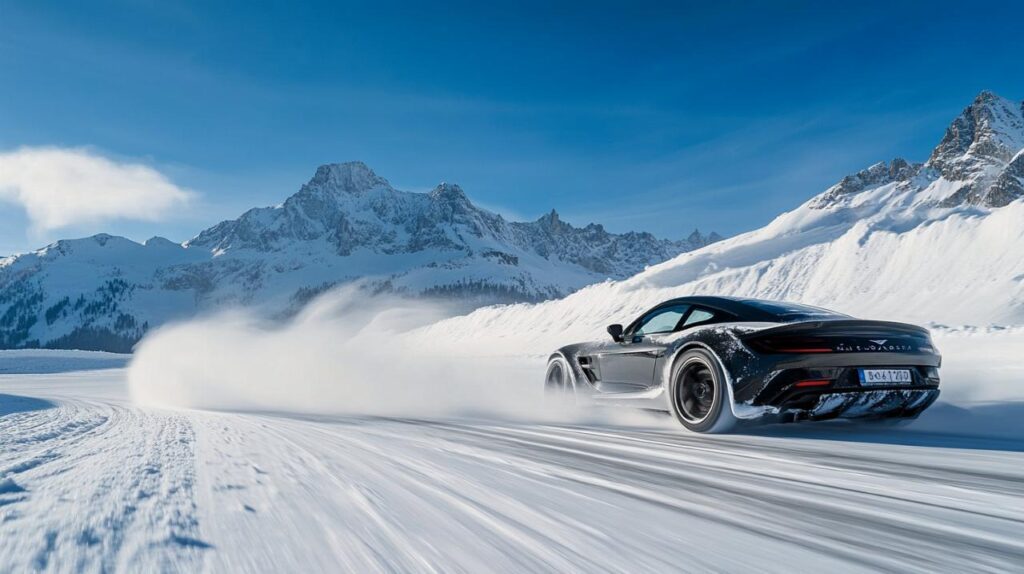
Nestled within the breathtaking French Alps, Flaine presents an extraordinary opportunity for those seeking to combine adrenaline with alpine beauty. The prospect of mastering high-performance vehicles on snow-covered circuits offers a thrilling departure from conventional driving experiences. With expert coaching and purpose-built icy tracks, participants discover not only the technical demands of winter driving but also the unique sensations that come from navigating challenging terrain in some of the most capable machines available. The combination of stunning mountain vistas and cutting-edge automotive engineering creates an unforgettable adventure that appeals to both seasoned enthusiasts and curious newcomers alike.
What High-Performance Vehicles Are Available for Ice Driving in Flaine?
Rally-inspired renault sport models for alpine challenges
Among the fleet of vehicles ready to tackle Flaine's frozen circuits, Renault Sport models stand out as rally-inspired machines designed specifically for performance in demanding conditions. These cars bring motorsport heritage directly to the alpine environment, allowing drivers to experience the same kind of responsive handling and precision that has defined rallying for decades. The Renault RS course offers participants a chance to push these agile vehicles through tight corners and accelerate across open stretches, all while learning how to manage traction on surfaces where grip is constantly shifting. The engineering behind these models emphasises lightweight construction and finely tuned suspension systems, making them ideal companions for those looking to understand how professional drivers harness power on unpredictable terrain.
Beyond Renault, the driving courses in Flaine also feature an impressive array of other manufacturers known for their prowess in challenging conditions. Subaru vehicles, renowned for their all-wheel-drive capabilities and rally pedigree, provide another dimension to the ice driving experience. Toyota GR models bring Japanese precision and reliability to the frozen tracks, while Alpine cars offer a blend of French elegance and sporting character. For those seeking the ultimate in luxury and performance, Porsche vehicles are available, combining iconic engineering with the unique challenge of controlling rear-engine dynamics on ice. Each of these marques contributes something distinct to the overall experience, ensuring that participants can explore different philosophies of automotive design and performance under the same wintry conditions.
Luxury performance cars adapted for snow-covered circuits
The adaptation of luxury performance cars for ice driving requires meticulous preparation and specialist knowledge. Vehicles that excel on conventional tarmac must be recalibrated for surfaces where conventional laws of physics seem almost suspended. Tyres designed specifically for ice provide the crucial contact patch between machine and frozen ground, while electronic stability systems are often adjusted to allow controlled slides rather than preventing them entirely. This delicate balance between safety and excitement defines the experience of driving these high-performance vehicles in Flaine, where the goal is not simply to go fast but to understand how speed, direction, and control interact when traditional grip levels are dramatically reduced.
What makes the luxury offerings particularly compelling is the way they challenge drivers to reconsider their understanding of automotive capability. A Porsche sliding gracefully through a corner on ice reveals handling characteristics that remain hidden during normal road driving. The feedback through the steering wheel becomes more immediate and nuanced, whilst throttle inputs demand greater precision and forethought. This heightened sensitivity transforms what might initially seem like a limitation into an educational opportunity, where participants learn to read the subtle signals that all vehicles communicate but which are often masked by high-grip surfaces and modern driver aids. The result is not only improved skills on ice but also a deeper appreciation of vehicle dynamics that translates to greater confidence in all driving conditions.
Which advanced techniques will you learn on flaine's icy tracks?
Mastering Traction Control and Steering Precision on Snow
The foundation of successful ice driving lies in understanding how traction control systems can be both ally and adversary on frozen surfaces. Professional instructors at Flaine guide participants through the nuances of modulating these electronic aids, explaining when to rely on them and when to trust in mechanical sympathy and driver intuition. Steering precision becomes paramount when grip levels fluctuate from moment to moment, and the courses are designed to develop anticipation rather than reaction. Drivers learn to look further ahead than they might on conventional roads, identifying changes in surface texture and gradient that signal alterations in available traction before the vehicle's behaviour becomes unsettled.
This focus on proactive rather than reactive driving represents a fundamental shift in approach for many participants. The techniques taught emphasise smooth inputs across all controls, recognising that sudden movements can overwhelm the limited grip available and lead to loss of control. Throttle application becomes an exercise in progressive pressure, whilst steering angles are adjusted with measured precision. These skills, honed on Flaine's purpose-built circuits, create drivers who are not only more capable on ice but also more refined and considerate in their everyday driving. The transfer of learning from snow-covered tracks to normal roads is remarkably effective, with many participants reporting increased awareness and confidence long after their alpine adventure concludes.
Understanding Weight Transfer and Braking on Slippery Surfaces
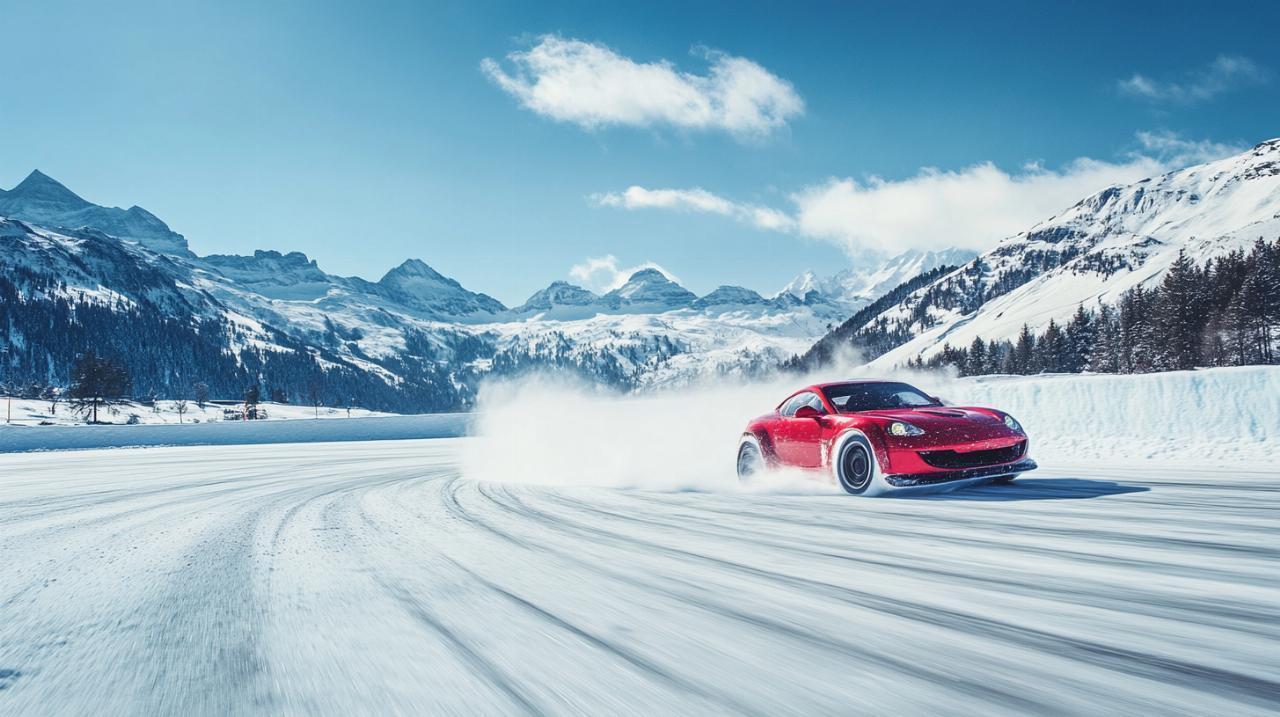
Weight transfer is perhaps the most critical concept that ice driving courses illuminate for participants. On surfaces with abundant grip, the subtle shifts of mass from front to rear and side to side are easily managed by tyres and suspension systems. On ice, however, these transfers become dramatically apparent, and understanding how to use them becomes essential for maintaining control. Braking on slippery surfaces demands particular attention, as locked wheels provide virtually no directional control. The courses at Flaine dedicate substantial time to teaching cadence braking techniques for vehicles without advanced anti-lock systems, whilst also demonstrating how to maximise the effectiveness of modern ABS in low-grip scenarios.
The sensation of weight transfer during cornering on ice provides immediate and sometimes dramatic feedback. Entering a turn too quickly or with excessive steering input can cause the front wheels to lose their tenuous grip, resulting in understeer that no amount of additional steering angle will remedy. Conversely, lifting off the throttle mid-corner shifts weight forward and can provoke oversteer, where the rear of the vehicle steps out. Learning to balance these dynamics, using throttle, brake, and steering inputs in harmonious combination, represents the essence of advanced ice driving technique. The coaching provided helps participants recognise the signs of impending loss of control and develop the instinctive responses needed to catch and correct slides before they escalate. This education in vehicle dynamics provides insights that prove valuable across a lifetime of driving, making the investment in an ice driving course at Flaine both enjoyable and practically beneficial.
Why Choose Flaine and Surrounding Savoie Locations for Ice Driving Courses?
The unique driving environment of flaine's alpine setting
Flaine's position within the French Alps creates an environment that is both challenging and spectacular. The pedestrian-focused resort emphasises sustainability and provides a peaceful base from which to launch into the excitement of ice driving. The elevation of the driving circuits, situated at around one thousand five hundred and twenty metres, ensures reliable snow conditions throughout the winter season, typically running from December through to March. This consistency is crucial for ice driving courses, as it allows for predictable surface conditions that can be maintained and groomed to provide optimal learning environments. The backdrop of Mont Blanc and the Plateau Desert adds a dramatic visual dimension to the experience, reminding participants that they are operating in one of Europe's most iconic mountain landscapes.
The infrastructure supporting the ice driving experience in Flaine has been carefully developed to balance accessibility with the pristine character of the alpine setting. Free parking facilities and efficient shuttle services ensure that participants can reach the driving circuits without difficulty, whilst the pedestrian nature of the main resort preserves the tranquil atmosphere that makes Flaine attractive to families and winter sports enthusiasts alike. The combination of world-class driving facilities with comprehensive resort amenities means that ice driving courses can be integrated into broader winter holidays, offering variety for groups with diverse interests. Webcam views and weather information are readily available, allowing potential participants to monitor conditions and plan their visits with confidence.
Alternative Ice Driving Venues: Tignes, Alpe d'Huez, and Chamonix-Mont-Blanc
Whilst Flaine offers exceptional facilities and a compelling setting, the broader Haute-Savoie and surrounding regions provide additional venues for those keen to explore ice driving in slightly different contexts. Tignes, renowned for its high-altitude skiing and reliable snow cover, also hosts ice driving experiences that take advantage of similarly consistent conditions. The resort's reputation for challenging winter sports extends naturally to automotive activities, attracting those who seek comprehensive alpine adventures. Alpe d'Huez, famous for its cycling heritage, transforms during winter months into another prime location for ice driving, offering circuits that combine technical challenges with stunning panoramic views across the French Alps.
Chamonix-Mont-Blanc represents perhaps the most iconic of all alpine destinations, and its ice driving offerings benefit from the prestige and infrastructure associated with this legendary resort. The proximity to Mont Blanc itself adds gravitas to the experience, and the long-established winter sports culture ensures that facilities are of the highest standard. For those based in the Rhône region or further afield, these alternative venues provide options that may offer greater convenience or specific features that align with individual preferences. Each location brings its own character and challenges, but all share the fundamental appeal of combining automotive excitement with the majesty of the French Alps. Whether choosing Flaine or exploring these alternatives, participants can be confident that their ice driving experience will be both professionally organised and memorably situated within some of Europe's finest mountain scenery.