

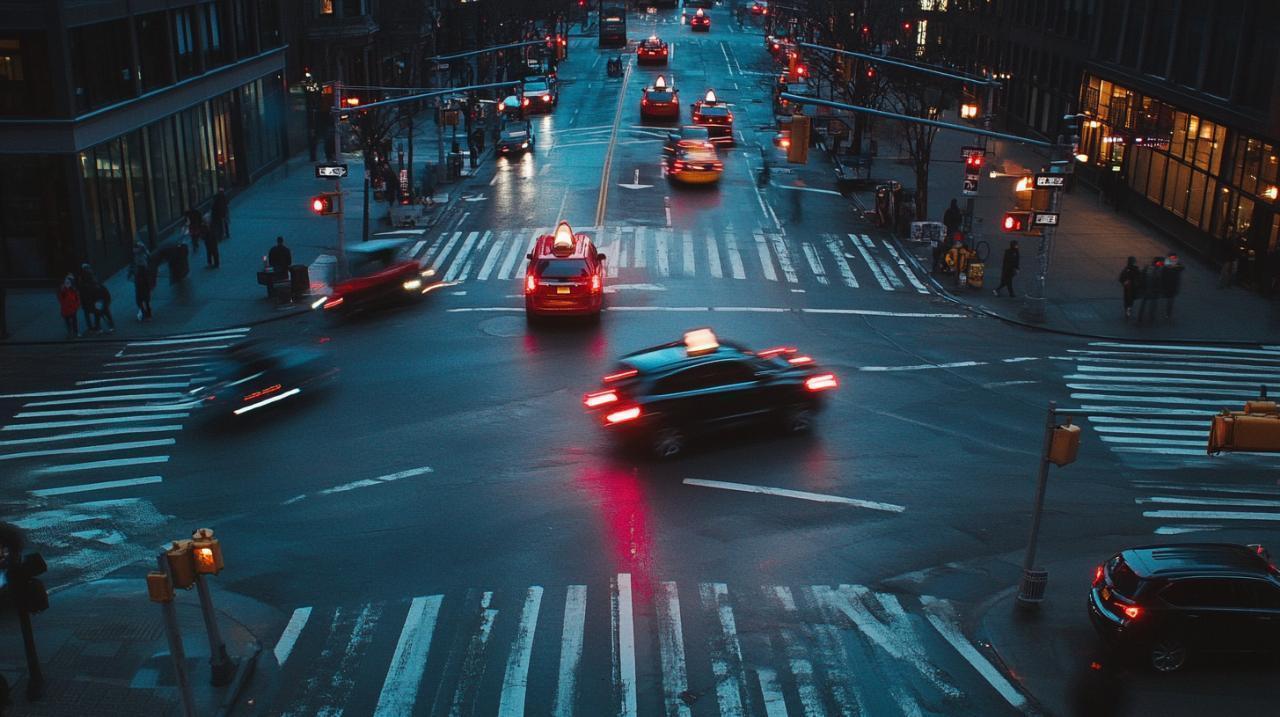
Crossing a junction when the signal displays red is among the most frequently recorded traffic offences in the United Kingdom, carrying consequences that extend far beyond a fleeting moment of impatience or misjudgement. With over 800 red light cameras positioned at critical junctions throughout the country and approximately one million motorists receiving traffic penalties annually, the enforcement of road safety at intersections has never been more rigorous. Understanding the repercussions of ignoring a red signal, from the immediate financial penalties to the longer-term implications for your driving record and motor insurance, is essential for every driver navigating Britain's roads.
Understanding the Penalties: Points and Fines for Running a Red Light
When a driver crosses the stop line after the traffic signal has turned red, the consequences are both immediate and measurable. The standard penalty for this offence involves a fixed penalty notice that typically includes a fine of £100 and the endorsement of 3 penalty points on the driving licence. This sanction applies whether the violation was captured by a fixed camera or observed by a traffic officer on patrol. The points imposed for running a red light remain on the driving record for a full four years, though they are considered active for penalty totalling purposes for three years. Should a motorist accumulate 12 or more points within a three-year period, they face the prospect of a six-month disqualification from driving, a measure designed to deter repeated offences and promote safer behaviour on the roads.
How many points will you lose on your licence?
The endorsement of 3 penalty points is the standard consequence for failing to stop at a red light. These points serve as a formal record of the traffic offence and are visible to insurers and enforcement agencies alike. For drivers who already carry points from previous violations, the addition of further endorsements can quickly bring them closer to the threshold that triggers a driving ban. It is worth noting that first-time offenders may be offered the opportunity to attend an educational course in place of penalty points, provided they meet certain eligibility criteria and respond promptly to the Notice of Intended Prosecution. Such courses are designed to reinforce safe driving practices and may help motorists avoid the longer-term impact of points on their record.
What Are the Financial Penalties for Crossing on Red?
The financial cost of running a red light begins with the fixed penalty notice of £100, a sum that reflects both the seriousness of the offence and the administrative burden of enforcement. However, failing to respond to a Notice of Intended Prosecution within the stipulated timeframe can escalate the matter significantly, with potential fines reaching as high as £1,000 if the case proceeds to court. The severity of the penalty may also increase if the offence is deemed particularly reckless or if it resulted in a collision or near miss. Beyond the immediate fine, the financial implications extend to other areas, including the cost of increased motor insurance premiums and, in some cases, the expense of attending a remedial driving course. The cumulative effect of these penalties underscores the importance of adhering to traffic signals and maintaining vigilance at junctions.
The Impact on Your Motor Insurance and Driving Record
A conviction for running a red light does not simply disappear once the fine is paid or the points are recorded. The endorsement on your driving licence becomes part of your permanent driving history, visible to insurers when calculating premiums and to enforcement authorities when assessing your suitability to hold a licence. The presence of penalty points signals to insurers that you represent a higher risk, and this perception is often reflected in the cost of cover. For many drivers, the financial burden of increased premiums can exceed the initial fine several times over during the period that the points remain active on the record.
How a traffic offence affects your insurance premiums
Motor insurers assess risk based on a range of factors, and a history of traffic offences is among the most significant. When an insurer learns of penalty points on your licence, they may recalculate your premium to reflect the elevated risk of future claims. The extent of the increase varies depending on the insurer's underwriting criteria, the number of points, and the nature of the offence, but it is not uncommon for premiums to rise by a substantial margin. In some cases, insurers may also impose additional conditions on the policy or decline to offer cover altogether, particularly if the driver has accumulated multiple offences within a short period. This makes it all the more important to disclose any convictions or pending prosecutions when renewing or taking out a new policy, as failure to do so can render the cover invalid and expose the driver to significant financial liability in the event of an accident.
Long-term consequences on your driving privileges
Beyond the immediate financial and administrative penalties, the accumulation of points can have far-reaching consequences for your ability to drive. A total of 12 points within three years triggers an automatic disqualification, commonly referred to as a totting-up ban, which lasts for a minimum of six months. During this period, the individual is unable to drive legally, which can have profound implications for employment, personal mobility, and family responsibilities. Even after the ban is lifted, the points remain on the driving record for four years, continuing to affect insurance costs and serving as a reminder of past offences. For those whose livelihoods depend on driving, such as delivery drivers, sales representatives, or tradespeople, the loss of a licence can be particularly devastating, making it imperative to prioritise compliance with traffic regulations at all times.
The Role of Red Light Cameras in Enhancing Road Safety
The widespread deployment of red light cameras at busy junctions across the United Kingdom represents a significant investment in road safety infrastructure. These devices, which use a combination of high-speed photography, radar sensors, and infrared technology, are designed to capture images of vehicles that cross the stop line after the signal has turned red. The resulting photographic evidence is used to identify the registered keeper of the vehicle and issue a Notice of Intended Prosecution. While some motorists view these cameras as an unwelcome intrusion or a means of generating revenue, the evidence suggests that they play a crucial role in deterring dangerous driving behaviours and reducing the incidence of collisions at junctions.
How fixed cameras and radar technology monitor junctions
Red light cameras are typically installed at high-risk intersections where the volume of traffic and the complexity of signal phases create a heightened risk of collisions. The cameras employ sensors embedded in the road surface or mounted on overhead gantries to detect when a vehicle crosses the stop line after the signal has turned red. Once triggered, the camera captures a series of high-resolution images that document the position of the vehicle relative to the stop line, the state of the traffic signal, and the registration plate. Modern systems are capable of operating around the clock, using infrared technology to capture clear images even in low light conditions or at night. Some cameras are also equipped with radar sensors that measure the speed of approaching vehicles, enabling enforcement of both red light violations and speeding offences at the same location. This dual functionality enhances the effectiveness of enforcement measures and serves as a powerful deterrent to reckless driving.
Why the Department for Transport Relies on Enforcement Measures
The Department for Transport and local authorities across the country have long recognised that strict enforcement of traffic signals is essential to maintaining order and safety on the roads. Red light cameras provide a consistent and objective means of identifying offenders, reducing the reliance on manual observation by traffic officers and ensuring that violations are recorded and prosecuted in a fair and transparent manner. The data collected by these cameras also provides valuable insights into patterns of non-compliance, enabling authorities to target resources at the junctions where they are most needed. While there may be a small grace period built into some systems to account for genuine errors or momentary lapses in judgement, the primary purpose of red light cameras is to capture and deter deliberate violations that put all road users at risk. By maintaining a visible and effective enforcement presence at key junctions, the Department for Transport aims to foster a culture of compliance and reduce the number of collisions, injuries, and fatalities that result from running red lights.