
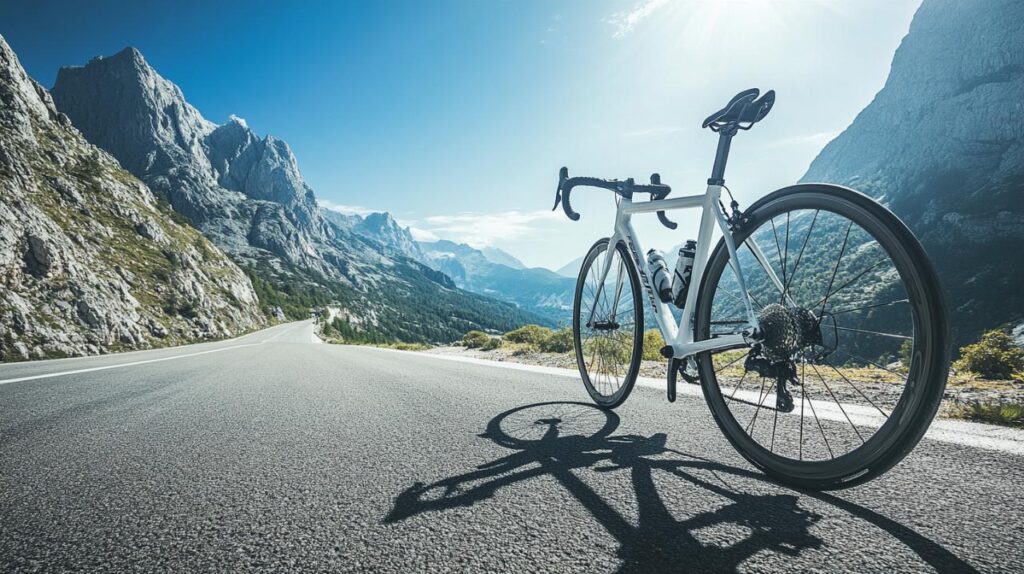
The professional peloton offers a unique testing ground for cutting-edge cycling technology, where equipment must endure the most demanding conditions whilst delivering measurable performance advantages. Simon Geschke's choice of the Look 795 Blade RS for the Tour de France represents a fascinating case study in how modern engineering principles translate into real-world racing success. This machine, fresh from the French manufacturer's design studios, embodies the latest thinking in aerodynamic efficiency and structural rigidity, developed in close collaboration with the Cofidis cycling team.
Technical Specifications and Frame Engineering of the Look 795 Blade RS
Advanced carbon fibre construction and aerodynamic design features
The 795 Blade RS showcases Look's commitment to pushing the boundaries of carbon fibre technology. At the heart of this bicycle lies a frame that tips the scales at a remarkably light 905 grams, achieved through meticulous layup schedules and the strategic placement of high-modulus carbon throughout the structure. This weight figure becomes even more impressive when considering the simultaneous improvements in both aerodynamic performance and structural stiffness that Look's engineers have managed to incorporate.
The aerodynamic refinements represent a substantial leap forward, with wind tunnel testing revealing a ten percent improvement over the previous generation. This enhancement stems from carefully sculpted tube profiles that manage airflow more effectively across the frame, reducing drag whilst maintaining the structural integrity necessary for professional racing. The design team worked extensively with Cofidis riders during development, ensuring that theoretical aerodynamic gains translated into tangible benefits under race conditions. The integration of disc brakes into the design presented additional challenges, as the engineers needed to accommodate larger clearances and mounting hardware without compromising the sleek profile that defines modern racing bicycles.
Rear axle stiffness has seen a seven percent increase compared to earlier iterations, addressing professional riders' demands for more efficient power transfer during intense efforts. This enhancement proves particularly valuable during sprints and steep climbing, where every watt counts and flex in the drivetrain area can mean the difference between winning and losing. The frame's layup schedule concentrates additional carbon reinforcement around the bottom bracket and chainstays, creating a platform that resists torsional forces whilst maintaining vertical compliance for rider comfort over rough surfaces.
Geometry and Weight Distribution for Professional Racing Applications
The geometry of the 795 Blade RS reflects contemporary thinking about race bicycle positioning, balancing aggressive handling characteristics with stability at high speeds. Look has maintained relatively traditional head tube and seat tube angles, recognising that professional riders prefer predictable handling over radical geometry experiments. The wheelbase dimensions provide sufficient stability for descending at speeds exceeding seventy kilometres per hour, whilst keeping the bike responsive enough for rapid directional changes in bunch sprints or technical mountain descents.
Weight distribution across the frame plays a crucial role in how the bicycle handles under varying conditions. The designers have positioned mass as low and central as possible, contributing to a planted feel during cornering and a lively response when accelerating out of turns. This attention to weight placement becomes particularly noticeable on undulating terrain, where the bike needs to respond instantly to shifts in rider input. The frame kit, available separately for custom builds at five thousand three hundred and ninety euros, includes the fork and seatpost, providing a comprehensive foundation for those seeking to create their ideal racing machine.
Simon Geschke's Configuration and Component Selection for Tour de France Competition
Drivetrain, wheelset and cockpit setup choices
Professional cyclists work closely with team mechanics to establish optimal component specifications for their individual riding styles and the specific demands of stage races like the Tour de France. Geschke's 795 Blade RS features a carefully considered parts selection that balances weight, reliability, and performance characteristics. The drivetrain represents the interface between rider effort and forward motion, making component choice in this area particularly critical for multi-week stage races where mechanical reliability becomes as important as lightweight construction.
Wheelset selection involves complex trade-offs between aerodynamic efficiency, weight, and durability. Deep-section carbon wheels offer aerodynamic advantages on flat stages and time trials, whilst lighter climbing wheels prove beneficial on mountain stages where gravity becomes the dominant resistance force. Many teams now opt for a single wheelset that compromises between these extremes, reducing the logistical complexity of wheel changes whilst accepting slightly sub-optimal performance in specific situations.
Cockpit components including the handlebar, stem, and integrated bar-stem combinations significantly influence both aerodynamics and rider comfort. Modern professional setups increasingly feature integrated designs that hide cables internally, reducing drag whilst presenting challenges for mechanical servicing. The positioning of brake levers and gear controls must accommodate Geschke's hand size and preferred reach, with millimetre-level adjustments often making meaningful differences in comfort over stages lasting five hours or more.
Power metre integration and performance monitoring systems
Contemporary professional cycling relies heavily on power measurement for pacing strategies and training analysis. Geschke's bicycle incorporates power metering technology that provides real-time data on his effort output, allowing both the rider and team directors to make informed tactical decisions during stages. This information proves particularly valuable on mountain stages, where maintaining specific power outputs can mean the difference between staying with a group or being distanced on crucial climbs.
The integration of power metres into modern drivetrains has become increasingly seamless, with options ranging from crank-based systems to pedal spindles and spider-mounted sensors. Each approach offers distinct advantages in terms of accuracy, ease of maintenance, and compatibility with different drivetrain configurations. The data streams from these systems feed into cycle computers that aggregate multiple metrics, providing a comprehensive picture of effort distribution throughout a stage.
Beyond basic power output, advanced metrics such as left-right balance and pedalling smoothness offer insights into biomechanical efficiency and potential injury risks. Teams employ sports scientists who analyse this data between stages, identifying opportunities for position optimisation or highlighting early warning signs of fatigue that might necessitate tactical adjustments in upcoming stages. The Look 795 Blade RS accommodates these technologies without compromising its clean aesthetic or aerodynamic profile.
Real-World Performance Assessment Throughout the Tour de France
Climbing Efficiency and Handling Characteristics on Mountain Stages
The Tour de France mountain stages provide the ultimate testing ground for lightweight racing bicycles, where sustained climbs at gradients exceeding ten percent reveal any shortcomings in frame stiffness or weight distribution. The 795 Blade RS demonstrates particular competence on these demanding stages, with the combination of low frame weight and enhanced rear triangle stiffness translating into efficient power transfer even during seated climbing efforts at high cadences.
Handling characteristics on technical descents prove equally important, as riders frequently reach speeds where small instabilities can have serious consequences. The 795 Blade RS exhibits confidence-inspiring stability through high-speed sweeping corners, whilst remaining responsive enough for the tight switchbacks that characterise many Alpine and Pyrenean descents. The integration of disc brakes contributes significantly to this performance, providing consistent stopping power regardless of weather conditions and allowing riders to brake later into corners without fear of rim overheating or reduced modulation.
The frame's vertical compliance characteristics become apparent over the course of long mountain stages, where road surfaces often deteriorate compared to major thoroughfares used during flat stages. This engineered flex helps reduce rider fatigue by absorbing high-frequency vibrations that would otherwise be transmitted directly through the contact points. Geschke's ability to maintain performance late in mountain stages reflects not just his conditioning but also the bicycle's capacity to minimise unnecessary energy expenditure through superior vibration damping.
Sprint Responsiveness and High-Speed Stability in Flat Stages
Flat stages culminating in bunch sprints place different demands on racing bicycles, prioritising aerodynamic efficiency and sprint responsiveness over outright climbing performance. The ten percent aerodynamic improvement that Look achieved with the 795 Blade RS translates into measurable advantages during these stages, where riders spend hours in the peloton at speeds approaching fifty kilometres per hour. Even marginal reductions in drag compound over the course of a five-hour stage, potentially saving watts of effort that can prove decisive in the final sprint.
Sprint responsiveness relates to how quickly the frame accelerates when subjected to maximum rider effort, typically occurring during the final few hundred metres before the finish line. The enhanced rear triangle stiffness of the 795 Blade RS contributes directly to this characteristic, ensuring that explosive pedalling efforts translate immediately into forward acceleration rather than being dissipated through frame flex. Professional sprinters often prefer stiffer frames even if they sacrifice some vertical compliance, accepting a harsher ride in exchange for more direct power transmission.
High-speed stability becomes critical when navigating through the peloton at race speeds, particularly during the chaotic positioning battles that characterise the final thirty kilometres of sprint stages. The 795 Blade RS geometry provides a stable platform that tracks predictably even when riding in close proximity to other cyclists, essential for maintaining confidence when making split-second decisions in the bunch. Complete bicycle pricing ranges from eight thousand four hundred and ninety euros to twelve thousand nine hundred and ninety euros depending on component specification, positioning this machine firmly in the professional and serious amateur market segment. For those seeking the ultimate in time trial performance, Look simultaneously released the 796 Monoblade RS at six thousand nine hundred and ninety euros for the frame, featuring disc brake integration and aerodynamic refinements specifically tailored to solo efforts against the clock.